


UserTesting is built for quick input, while Dscout is built for collecting ongoing high fidelity feedback.
Dscout bets on vetted participants and deeper research, with no compromises on security.
So which is right for your team?
UserTesting optimizes for speed and volume, filling studies fast from a large global panel.
Dscout optimizes for quality: a hand-vetted Scout panel, a broader range of methods like diary studies and moderated interviews, and the category's top security certifications (SOC 2 Type II, HIPAA, HITRUST, ISO 27001).
Teams that need trustworthy insights choose Dscout.


Dscout—and the difference is structural.
Dscout's Scout panel is verified, and researchers can hand-pick participants or review video screener responses before a study even launches. That means fewer unusable submissions and richer, more authentic data.
UserTesting's panel is large (millions across 130+ countries), but that scale comes with tradeoffs—reviews consistently flag professional testers and low-effort submissions teams have to filter out before the data's usable.
When research drives real decisions, participant quality is the whole game.

Dscout—it's a multi-method platform, while UserTesting is primarily an evaluative tool.
Dscout supports the full research lifecycle in one place: diary studies, human and AI-moderated interviews (no external scheduling tools required), rich media surveys, website intercepts, and usability testing. Researchers can even move participants from a diary study straight into a moderated interview without switching tools.
UserTesting is built for fast, unmoderated usability testing. Their own help documentation acknowledges that diary studies require paid professional services to run. Teams that need more than quick usability cycles— concept testing, longitudinal tracking, in-context field research—will hit real limits.

Dscout AI surfaces strong opinions and surprising insights so you can dive deeper, faster.

Dscout—it holds SOC 2 Type II, HIPAA, HITRUST, ISO 27001, and WCAG 2.0 certifications, among the most comprehensive compliance credentials in the UX research category. For teams in regulated industries like healthcare, financial services, and government, that level of certification isn't optional.
UserTesting holds SOC 2 Type II but doesn't publicly list HITRUST certification.
For enterprise programs where data handling requirements are non-negotiable, Dscout's security posture is the broader, more defensible foundation.

Dscout—every account is paired with an expert Research Advisor, dedicated support that isn't gated behind a premium tier. Advisors help with study design, recruitment strategy, and analysis, so teams spend less time figuring out the tool and more time doing research.
UserTesting's support has reportedly declined since its acquisition, according to customer feedback. MassMutual, a former UserTesting customer, described their Dscout onboarding as "night and day" by comparison.
Dscout AI surfaces strong opinions and surprising insights so you can dive deeper, faster.


The pool of participants are great, the tagging system is flexible and super helpful, and they now have the option to run usability tests (in addition to the live interviews, surveys, and diary studies). Videos are automatically transcribed.
They also will handle incentives (as long as you have a credit card or balance on file), for 10% of the incentive. And the support staff are all friendly, helpful, and respond quickly.

Dscout has been a game-changer for my team. Diary studies were a significant gap in our research methods, but with Dscout, we can now run them much more frequently. One standout feature is the ability to seamlessly transition diary study participants into live interviews within the same project, greatly streamlining the process of collecting necessary data.
Since adopting the platform, we’ve benefited from frequent updates and new features that have significantly enhanced efficiency and ease of use.
I love the support from the Dscout team. It’s also really nice to be able to have all aspects of the project in one place....not many platforms have such a holistic project setup available for researchers. The convenience of having all these research tools in one place and having on-call help from Dscout makes this platform invaluable…I’m convinced Dscout is likely the best platform of its kind.

Dscout—it's purpose-built for enterprise research programs, with dedicated Research Advisors in every account, team workspaces, comprehensive compliance certifications, and support for complex, multi-method programs at scale.
UserTesting has enterprise features, but they're better suited to product and design teams running high-volume, fast-cycle usability validation. For organizations building a serious qualitative research practice — especially in regulated industries — Dscout is the stronger choice.
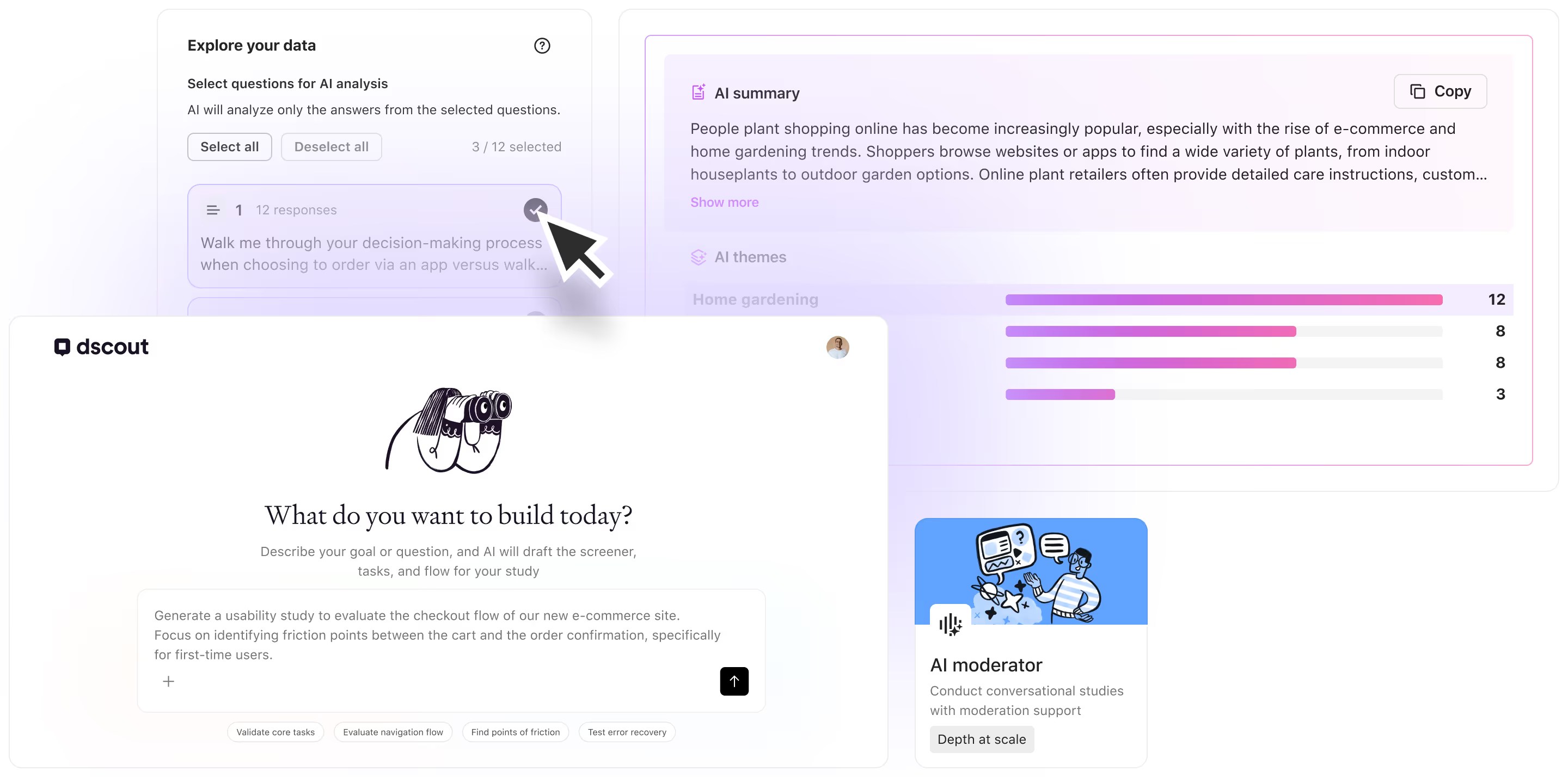
Dscout AI includes a multitude of features like automated transcription, AI-generated summaries for open-ended and video responses, dynamic follow-up questions that probe participants in real time, AI-moderated interviews, Explore Your Data for natural-language querying, and Draft Your Study for AI-assisted study design.
All AI-generated content is labeled and linked back to source material, and it operates within the same enterprise security standards (SOC 2, HIPAA, HITRUST, ISO 27001) as the rest of the platform.
Yes Dscout is HIPAA compliant, along with holding SOC 2 Type II, HITRUST, ISO 27001, and WCAG 2.0 certifications, making it one of the most security-certified platforms in the UX research category. That matters for teams in healthcare, financial services, and other regulated industries where data handling requirements aren't negotiable.
UserTesting holds SOC 2 Type II but doesn't publicly list HITRUST certification.
Yes—diary studies are one of Dscout's longest-standing strengths. Researchers can run short-burst or long-form studies, capture video, audio, images, and written responses in the moment, and move participants directly into a moderated interview, all within one project.
UserTesting has referenced their diary study capability for years, but their own help documentation confirms that it actually requires paid professional services to run. Dscout's Diary is native, self-serve, and has been a core differentiator for over a decade.
Yes—Dscout offers live interviews with built-in scheduling, session management, automatic transcription, and video recording, so no Zoom, Calendly, or other external tools are required. Researchers can also move participants from a prior diary or Express mission straight into a moderated Live interview without re-recruiting.
UserTesting supports moderated interviews natively as well, though without that same native handoff from other study types.
No—UserTesting's "unlimited" plans aren't truly unlimited. A Fair Usage Policy caps qualitative studies at roughly 15 participants, limits concurrent studies, and charges overage fees beyond those limits. Teams that are evaluating UserTesting should request the full policy terms before signing, since restrictions often surface only after the contract is in place.
Dscout's Activity Credit model ties directly to usage, with no hidden throttles or caps in the fine print.
Dscout's entry-level plan starts around $24,400 per year (Base tier, 2 users, 200 credits). UserTesting uses a "Study Units" credit model with pricing that varies by plan, and the full cost often includes add-ons for seats, support, and screener capabilities not reflected in the base price.
Both platforms use custom, subscription-based enterprise pricing, so contact Dscout's team for a tailored quote based on your program's needs.
